

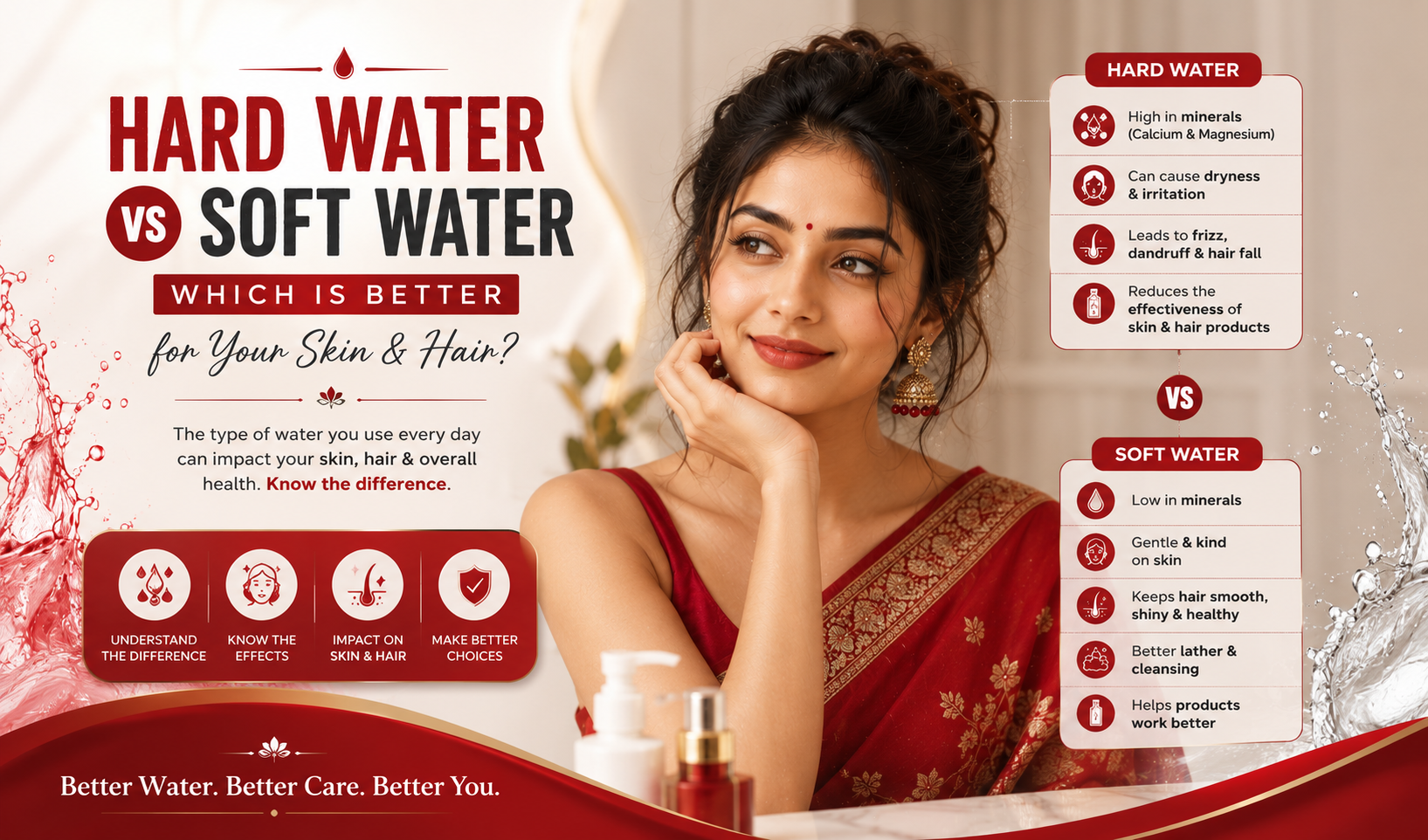
Water is essential in our daily skincare and haircare routines. We use it to wash our face, shower, shampoo our hair, and rinse off skincare products.
But did you know that not all water is the same?
The type of water flowing from your tap can affect the health of your skin and hair. Understanding hard water and soft water can help you make better choices for your daily routine. Let's compare them.
What Is Hard Water?
Hard water contains high levels of natural minerals, mainly calcium and magnesium.
These minerals are not harmful to drink, but they can leave a thin layer on your skin and hair after every wash.
Over time, this buildup may contribute to:
- Dry skin
- Rough or frizzy hair
- Hair fall due to breakage
- Dandruff and itchy scalp
- Reduced effectiveness of skincare and haircare products
Many cities across India receive water that is moderately hard to very hard.
What Is Soft Water?
Soft water contains very low levels of calcium and magnesium.
Because it doesn't leave mineral deposits behind, soaps and cleansers rinse away more easily, helping your skin and hair feel cleaner and softer.
People who use soft water often notice:
- Softer skin after bathing
- Smoother, shinier hair
- Better lather from face washes and shampoos
- Less dryness after washing
Hard Water vs Soft Water: Comparison
| Mineral Content | High | Low |
| Soap Lather | Less | More |
| Skin Feel | May feel dry or tight | Softer and smoother |
| Hair Texture | Can become rough or frizzy | Softer and more manageable |
| Mineral Buildup | Yes | Minimal |
| Product Performance | May reduce effectiveness | Products rinse more easily |
Is Hard Water Bad for Your Skin?
Not necessarily. Hard water doesn't directly damage your skin, but frequent exposure may leave mineral residue behind. This can make your skin feel dry or uncomfortable, especially if you already have sensitive or dry skin.
The good news is that a gentle skincare routine can help reduce these effects.
How Does Hard Water Affect Your Hair?
Hair is often more noticeably affected by hard water than skin. Minerals can build up on the hair shaft, making hair feel:
- Dry
- Heavy
- Dull
- Difficult to manage
Your scalp may also feel itchy or flaky if it becomes excessively dry.
Can You Change Hard Water?
Installing a water softener is one option, but it isn't practical for every household.
Fortunately, you can still protect your skin and hair by making a few simple changes to your routine.
Here are a few easy tips:
✔ Wash with lukewarm water instead of hot water.
✔ Moisturize your skin after every shower.
✔ Use conditioner after every shampoo.
✔ Avoid over washing your face and hair.
✔ Choose gentle skincare and haircare products that are suitable for Indian conditions and help maintain your skin's natural moisture barrier.
Which Water Is Better?
If we compare only skin and hair health, soft water generally offers a more comfortable cleansing experience because it leaves fewer mineral deposits behind. However, many people don't have access to soft water.
Worrying about changing your water supply? Focus on building a skincare and haircare routine that supports your skin and hair, even if you live in a hard-water area. The most important step is consistency. Regular use matters more than perfection.
Final Thoughts
Whether you have hard water or soft water, healthy skin and hair depend on good daily habits.
Understanding your water type helps you choose the right routine and set realistic expectations for your skincare and haircare products. If you live in an area with hard water, simple changes like using gentle cleansers, moisturizing regularly, and caring for your scalp can make a noticeable difference over time.
Healthy skin and strong hair begin with understanding what affects them every day, and acting on it consistently.


